

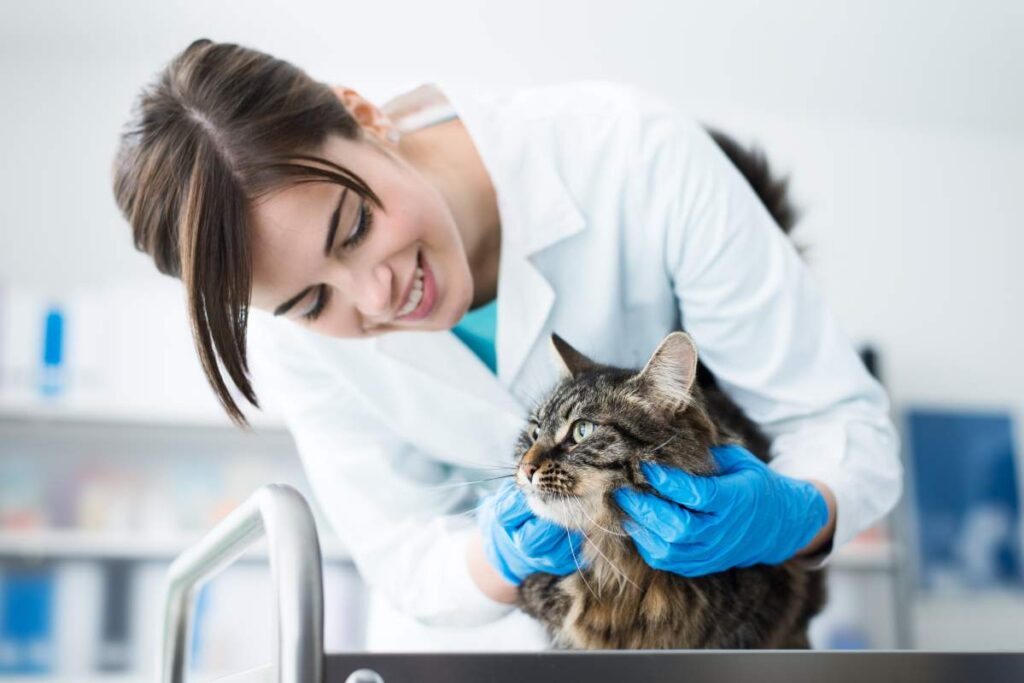
Which vaccines are considered essential for cats?
For most cats, the essential vaccines are the combination commonly called FVRCP and the rabies vaccine. Kittens and young cats also generally need protection against feline leukemia virus, known as FeLV, because their risk is higher during the first year of life.
Vaccination decisions should reflect a cat’s age, health, living arrangement, travel, contact with other animals, and likelihood of escaping outdoors. An indoor lifestyle lowers some risks, but it does not eliminate them entirely.
What does the FVRCP vaccine protect against?
FVRCP is a combination vaccine that helps protect against three widespread feline diseases:
- Feline herpesvirus type 1: Often causes sneezing, nasal congestion, eye discharge, conjunctivitis, and recurring respiratory problems.
- Feline calicivirus: Can cause respiratory illness, mouth ulcers, fever, and, in some cases, more serious systemic disease.
- Feline panleukopenia virus: A highly contagious and potentially fatal disease that can cause severe vomiting, diarrhea, dehydration, and suppression of the immune system.
Panleukopenia is especially dangerous for kittens. The virus can persist in the environment for long periods, which means exposure may occur through contaminated objects, clothing, shoes, carriers, or other animals. A cat does not necessarily need to roam outdoors to encounter infectious material.
FVRCP is considered a core vaccine, meaning it is broadly recommended even for cats that live indoors.
Does an indoor-only cat really need vaccines?
Yes. Indoor cats still have meaningful exposure risks, although those risks may be lower than for cats that roam.
A cat may need to visit a veterinary facility, stay temporarily with another household, be transported during an emergency, or come into contact with an adopted animal whose health history is incomplete. Escaped indoor cats may also encounter unfamiliar animals or contaminated environments.
In Youngstown, OH, seasonal weather can create additional household changes. Cats may spend more time indoors during cold winters, and families may temporarily bring outdoor animals inside during severe weather. These situations can increase contact between pets that normally remain separate.
Indoor status is one factor in a vaccine assessment, not a reason to assume that every vaccine is unnecessary.
Is rabies vaccination required for cats in Ohio?
Rabies vaccination is considered a core vaccine for cats and is a public-health measure as well as a protection for the individual animal. Ohio allows local governments to establish rabies vaccination requirements, so residents should follow the rules that apply in their jurisdiction.
Rabies is almost always fatal after symptoms develop. Cats can be exposed through bites or saliva from infected wildlife, including animals that enter yards, garages, sheds, or homes. Even a cat that never goes outside could potentially encounter a bat that gets indoors.
Rabies vaccine timing depends on the product used and applicable local requirements. Some vaccines are labeled for one year and others for three years. A vaccine labeled for three years does not automatically mean every cat should receive the same interval; the product label, medical history, and local rules all matter.
Does every cat need the feline leukemia vaccine?
Every kitten and young cat should generally be considered for FeLV vaccination, even if the household currently plans to keep the cat indoors. Young cats are more vulnerable to progressive infection, and their living conditions may change during the first year.
Feline leukemia virus can spread through close contact with infected cats, including grooming, shared dishes, bite wounds, and prolonged household contact. Outdoor access, living with cats of unknown status, fostering, boarding, and adoption of new cats can increase risk.
For a healthy adult cat that has no contact with other cats and has no possibility of outdoor exposure, FeLV may become a non-core vaccine rather than a routine lifelong vaccine. Adult cats with outdoor access, frequent contact with unfamiliar cats, or a FeLV-positive housemate may need continued vaccination.
FeLV testing is generally recommended before vaccinating, particularly when a cat’s infection status is unknown or exposure is possible. Vaccination does not treat an existing infection.
What is a typical kitten vaccine schedule?
Kittens usually receive a series of FVRCP doses beginning at approximately 6 to 8 weeks of age, with additional doses spaced several weeks apart until roughly 16 to 20 weeks. The exact schedule may vary based on the kitten’s age at adoption, previous records, health status, and the vaccine product.
A common kitten plan may include:
- Multiple FVRCP doses during the early months of life.
- Rabies vaccination at the age specified by the vaccine label and local requirements.
- Two FeLV doses given several weeks apart, often beginning at about 8 weeks of age.
- Follow-up boosters after the initial kitten series.
The repeated kitten doses are necessary because antibodies passed from the mother can interfere with early vaccination. Later doses help close that period of incomplete protection.
A kitten that arrives without reliable records is generally treated as having an unknown vaccination history. Repeating needed vaccines is often safer than assuming that undocumented vaccinations occurred.
How often do adult cats need boosters?
Adult cats do not automatically need every vaccine every year. Booster timing depends on the vaccine’s licensed duration, the cat’s exposure risk, age, health, and prior vaccination history.
For many adult cats, FVRCP boosters are given at intervals longer than one year after the initial series. Rabies boosters follow the vaccine label and applicable regulations. FeLV boosters are usually continued annually for cats with regular exposure risk, while lower-risk adult cats may not need them as frequently or at all.
A vaccine record should include the product, date given, expiration information, and recommended next due date. This is particularly useful after adoption, a move, boarding, or a change from indoor-only living to supervised outdoor access.
Are optional vaccines ever appropriate?
Some vaccines are considered non-core because they are useful only in particular situations. Examples may include vaccines for Bordetella bronchiseptica or Chlamydia felis, depending on the cat’s environment and the presence of disease risk.
These vaccines may be considered for cats living in shelters, catteries, foster settings, multi-cat households, or other situations with frequent animal contact. They are not automatically appropriate for every household cat.
A vaccine decision should weigh the likelihood and seriousness of exposure against the vaccine’s expected benefit and possible adverse effects. More vaccines are not necessarily better if a cat has little chance of encountering the targeted disease.
What side effects should owners watch for?
Mild effects can occur after vaccination. A cat may be sleepy, less hungry, mildly sore, or slightly feverish for a day or two. These signs should generally improve rather than worsen.
Urgent veterinary attention is warranted for facial swelling, difficulty breathing, collapse, repeated vomiting, widespread hives, or marked weakness soon after vaccination. A persistent lump at an injection site also deserves evaluation, especially if it grows, remains present, or changes over time.
Cats should receive vaccines only when they are well enough for vaccination. A veterinarian may postpone immunization if a cat has significant illness, fever, or another condition that changes the risk-benefit assessment.
What should an owner bring to a vaccine discussion?
Useful information includes:
- The cat’s age and previous vaccine records.
- Whether the cat ever goes outdoors, even briefly.
- Contact with stray, foster, shelter, or newly adopted cats.
- Plans for boarding, travel, or household changes.
- Any history of vaccine reactions or chronic illness.
- Whether the cat lives with a FeLV-positive or medically unknown cat.
The most appropriate vaccine plan is usually neither “every vaccine every year” nor “no vaccines for indoor cats.” It is a documented schedule built around the diseases present in the region, the cat’s age and health, and the realistic ways exposure could occur.